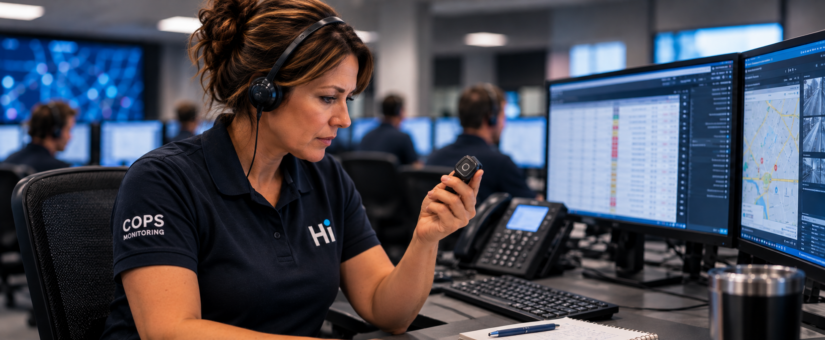
Tiffany Spotted a Wearable MPERS Pattern Before It Became a Bigger Problem
Tiffany could have handled each unexplained alarm correctly and moved on. Instead, she recognized a pattern, raised the question, and helped uncover a firmware issue affecting an entire line of wearable devices.
One unexplained alarm can be an anomaly.
Tiffany was seeing more than one.
While working in the PERS queue, she noticed certain wearable MPERS devices sending alarms without any voice contact from the customer.
Tiffany followed procedure and tried calling back through the devices.
The calls repeatedly failed.
Another alarm arrived with the same behavior.
Then another.
Tiffany stopped seeing separate alarms. She saw a pattern.
For eight years, Tiffany had been building experience at COPS. She was also one of the original members of the PERS team when it launched at her monitoring center.
That experience mattered now.
Tiffany could have handled each alarm correctly, documented what happened, and moved on to the next event.
Instead, she questioned why the same thing kept happening.
She brought the pattern to her manager.
That one decision started a larger investigation involving other COPS teams and our alarm dealer customer.
Tiffany’s instinct was right. Something deeper was happening.
The investigation uncovered a firmware issue.
Customers were canceling alarms from their wearable devices, but the devices delayed the cancellation signals. COPS continued receiving alarms the customers had already cleared.
That created more than extra activity.
A customer who believed an alarm had been canceled could still receive an unexpected callback.
COPS dispatchers could spend valuable time handling events that no longer required action instead of focusing on customers who genuinely needed help.
And the company providing those wearable devices could face questions from customers wondering whether the protection they depended on was working as expected.
One dispatcher noticing a pattern had exposed a problem that extended far beyond one alarm.
Our alarm dealer customer tested a firmware correction for the affected line of wearable devices.
The fix offered a path to fewer false activations, less unnecessary alarm activity, better use of monitoring resources, and more reliable service for customers using the devices nationwide.
Tiffany did not write the firmware.
She did something technology had not done for itself.
She recognized that several individually explainable events might actually be connected.
Then she trusted her experience enough to say something.
That is what eight years of real monitoring experience can produce: pattern recognition.
Anyone can respond to the event in front of them.
Experience can help someone recognize that the event in front of them looks suspiciously like the one before it.
Tiffany’s Human Intelligence connected those dots.
Her initiative turned an observation at one COPS workstation into information that could improve how an entire product line performed for the people relying on it.
That’s COPS Human Intelligence™ in Action.

Now imagine the pattern involves technology protecting your customers.
You may never see the individual alarms Tiffany sees.
You may not know that several seemingly unrelated events are beginning to form a pattern.
That’s why the experience behind your monitoring matters.
You want people at COPS who do more than handle each event correctly. You want people who have seen enough to recognize when something does not look right, care enough to question it, and take ownership of bringing the larger issue to your attention.
Because catching the pattern early can help you address a problem before more of your customers experience it.
Put experienced people behind the technology your customers trust.
Tiffany’s value was not simply that she noticed unusual alarms.
She connected them.
She questioned them.
And her decision to speak up helped uncover an issue that could affect your operations, your customers’ experience, and their confidence in the protection you provide.
When something begins to look wrong across your customer base, you want COPS Human Intelligence experienced enough to recognize the pattern before it becomes a bigger problem.