Al Stayed With Her Until Help Arrived
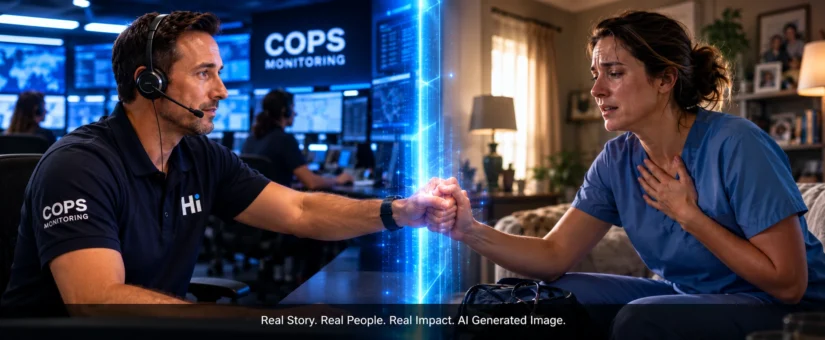
For 15 minutes, Al tracked Katherine’s worsening symptoms, kept responders informed, and gave her a calm, steady connection while she waited for help in a home she did not feel safe leaving.
Excerpt: Al’s constant reassessment kept responders informed as Katherine’s condition worsened and gave her a steady human connection until help arrived.
Katherine was providing care in a patient’s apartment when she suddenly needed emergency help herself.
She was having difficulty breathing. She felt dizzy. She had severe chest pain.
And she did not feel safe leaving.
The patient had become increasingly irate and was yelling. Katherine also believed there might be a firearm inside the apartment.
When Katherine activated her emergency device, Al had to manage two threats at once: a medical condition that could be getting worse and an environment that could become more dangerous.
He confirmed her location, learned that she could not safely leave, and kept asking focused questions about both her symptoms and what was happening around her.
Then Katherine’s condition began to change.
Her chest pain worsened and began radiating into the left side of her neck.
She developed cold sweats.
Breathing became more difficult.
Al did not treat the information he gathered at the beginning of the call as enough. He kept reassessing Katherine and made sure each important change reached the responders heading toward her.
Every new detail could change what responders needed to know.
At the same time, Katherine needed more than an accurate flow of information.
She was frightened, physically deteriorating, unable to leave safely, and waiting for help in a tense environment.
Al gave her something immediate.
“Focus on your breathing, I’m here with you.”
For approximately 15 minutes, Al stayed connected.
He kept the conversation going, repeatedly checked Katherine’s condition, and continued reassuring her as she became increasingly anxious about whether help was coming.
“I’m still here with you, ma’am.”
And he was.
When Katherine’s symptoms changed, Al noticed.
When responders needed new information, Al made sure they received it.
When Katherine needed reassurance, Al stayed present.
He continued until Katherine confirmed that law enforcement and EMS had arrived. Her employer later reported that she went to the hospital for evaluation and was medically cleared.
Getting emergency help moving would have been essential.
Al did more.
He understood that a 15-minute emergency is not one static event. Katherine’s medical condition was changing. The environment around her remained uncertain. The information responders needed could change with every answer.
Al kept the response moving with the situation.
That required him to listen, reassess, communicate, and remain calm enough to support Katherine while also helping responders arrive with a clearer understanding of what they were walking into.
Technology gave Katherine a way to reach COPS.
Al’s Human Intelligence made sure the response continued to evolve after that connection was made.
That’s COPS Human Intelligence™ in Action.

When your customer’s condition is changing by the minute, you want someone who keeps changing the response with it.
Imagine one of your customers waiting for emergency help while their symptoms worsen and the situation around them remains uncertain.
You want the person representing your company to keep listening after the initial dispatch. To recognize new information. To keep responders updated. And to remain a calm, capable voice for your customer until help reaches them.
Al showed what that looks like.
When COPS represents you in a changing emergency, that judgment and human connection become part of the protection your customer trusted your company to provide.