Matthew Recognized a Second Danger During a Break-In
When a customer reported an intruder inside their business, Matthew helped coordinate the police response. Then he recognized another potential danger involving someone who wasn’t even at the scene yet.
An intruder had broken into a business, and the customer could see him on security cameras. What happened next would demonstrate why professional alarm monitoring requires more than responding to an alarm signal.
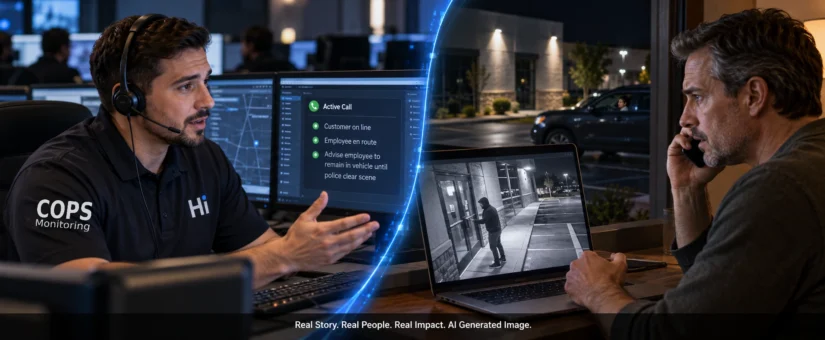
COPS Monitoring dispatcher Matthew was on the phone, gathering details about the intruder to help responding officers understand the situation.
Then he heard something that changed everything.
Professional alarm monitoring means anticipating what comes next.
As the customer described the intruder, Matthew remained calm and focused, gathering information about the man’s appearance and clothing.
During the conversation, Matthew learned that the customer was arranging for a coworker to meet police at the business.
On the surface, it seemed reasonable. Someone familiar with the property could help officers when they arrived.
But Matthew recognized a risk the customer might not have considered.
What if the employee arrived before police?
The intruder could still be there. An unexpected encounter could put the employee in danger. Responding officers might also mistake someone arriving at an active burglary scene for the person they were looking for.
The concern was well founded. The Phoenix Police Department’s commercial burglary prevention guidance specifically warns that employees entering a burglarized business could encounter an intruder or be mistaken for the burglar by police.
This is where professional alarm monitoring depends on something technology alone cannot provide: recognizing how the circumstances surrounding an alarm can create additional risks.
Matthew looked beyond the original alarm
Matthew didn’t simply acknowledge that someone was heading to the property.
He immediately gathered the coworker’s name, contact information, and vehicle description, recognizing that responding officers would benefit from knowing who else might be at the scene.
He also advised that the employee remain inside their vehicle until police arrived and cleared the property.
These were important precautions intended to reduce confusion and protect both the employee and responding officers.
At the same time, Matthew coordinated with another dispatcher to handle the police notification while he remained on the telephone gathering information and supporting the customer.
The emergency response could continue without Matthew having to end the conversation.
That’s an important distinction in professional alarm monitoring. The responsibility doesn’t necessarily end when authorities are notified. Understanding the situation and anticipating what might happen next can be just as important.
The customer needed more than a dispatch
As the situation continued, the customer became concerned that a door at the business might be unlocked.
Matthew understood the concern and offered to remain on the line until police arrived and cleared the scene.
The customer ultimately declined the offer and thanked him before ending the call.
It was a simple gesture, but an important one. Matthew recognized that the person on the phone was dealing with more than an alarm activation. There was uncertainty about the building, concern for the arriving employee, and a need to know that someone was paying attention.
His willingness to remain available reflected the human side of professional alarm monitoring, where communication and reassurance are part of the protection customers experience.
Why professional alarm monitoring requires Human Intelligence
A burglary signal can identify an alarm activation. Surveillance cameras can provide information about an intruder. Technology can connect the customer, monitoring center, and responding authorities.
But technology alone doesn’t necessarily recognize the significance of a conversation about someone heading to the scene.
Matthew did.
He listened carefully, considered what could happen next, and recognized a potential danger beyond the original alarm.
His actions demonstrated how preparation, sound judgment, situational awareness, and teamwork can turn an appropriate emergency response into a more thoughtful and protective one.
For an alarm dealer, that distinction matters.
When your customer experiences a break-in, the person answering the telephone is representing your company. Their decisions, communication, and ability to anticipate what might happen next become part of the protection your customer associates with you.
That’s COPS Human Intelligence™ in Action.

When choosing a monitoring partner, look beyond how quickly an alarm is handled. Consider whether the people behind that response are prepared to recognize risks that aren’t immediately apparent and take meaningful steps to address them.
Your customers trust you to help protect their people and property. Matthew’s story shows why having someone who can think beyond the alarm is an important part of honoring that trust.