Steve Built a Faster Path From Alarm to Emergency Response
By completing COPS Monitoring’s ASAP integration, Steve helped qualifying alarm information reach participating public-safety agencies electronically, reducing manual handling and improving the speed and accuracy of the connection your customers depend on when they need help.
When one of your customers needs emergency response, receiving the alarm is only the beginning.
Critical information still has to move from the monitoring center to the public-safety agency responsible for sending help.
The fewer unnecessary steps in that connection, the better.
COPS Monitoring had long supported ASAP, an industry initiative that allows qualifying alarm information to be transmitted electronically between monitoring centers and participating public-safety answering points. As a charter supporting member, COPS understood the potential: reduce manual handling, improve accuracy, and help important information move more efficiently to the agencies responsible for emergency response.
As more jurisdictions joined the ASAP network, that potential became increasingly meaningful for dealers and their customers.
COPS had begun preparing for an early 2020 launch when the pandemic required technology resources to shift toward maintaining operations through an unprecedented disruption and strengthening systems for the future.
ASAP continued expanding.
And Steve saw an opportunity to move the integration forward.
Steve took ownership.
On his own initiative, Steve revisited the requirements and reestablished collaboration with the national ASAP team.
Then he worked through the technical and operational details required to make the integration work at COPS.
He did it while continuing to manage his other software-development responsibilities, investing the additional time needed to move the project from planning into operation.
Within a few short weeks, the first city was live.
That changed something important for COPS dealers and their customers.
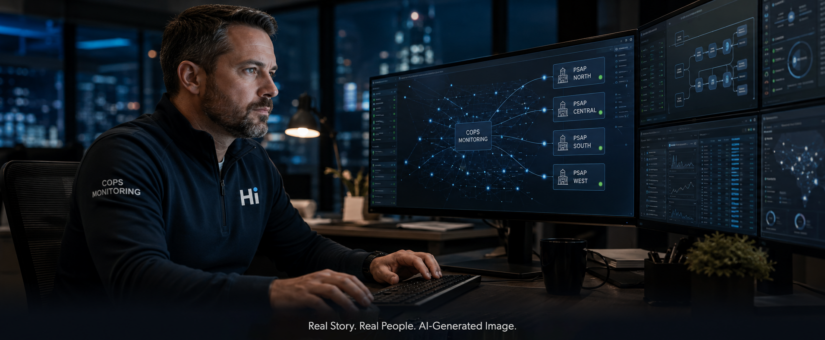
COPS could now electronically communicate qualifying alarm information with more than 150 participating public-safety answering points across the country.
Instead of relying entirely on manual communication, qualifying information could travel through a more direct electronic path.
That can mean faster electronic communication.
Fewer opportunities for information to be misunderstood.
Improved accuracy.
And a more scalable connection as additional jurisdictions join the ASAP network.
Your customer may never know Steve’s name. But they can benefit from what he built.
When your customer needs emergency response, they are depending on far more than the alarm system installed at their home or business.
They are depending on every connection behind it.
The signal reaching the monitoring center.
The monitoring center understanding what happened.
And the critical information reaching the agency responsible for sending help.
Steve strengthened one of those connections.
His work helps qualifying alarm information reach participating public-safety agencies through a faster, more direct electronic path while helping COPS manage increasing alarm activity efficiently and preserve the accuracy and personal attention dealers expect.
That is what the technology delivers.
But the technology did not take ownership of putting it into operation.
Steve did.
He recognized the value the growing ASAP network could provide, reopened the work, reconnected the people needed to move it forward, worked through the technical and operational requirements, and stayed with it until the first city was live.
That combination of initiative, judgment, technical expertise, and ownership is what turned capability into something your customers can actually benefit from.
And it demonstrates an important part of COPS Human Intelligence: sometimes the difference happens long before an alarm is received, when someone recognizes an opportunity to make the system behind your customer stronger and takes responsibility for making it real.
That is COPS Human Intelligence™ in Action.

Give your customers a stronger connection to emergency response.
When you choose a monitoring partner, look beyond the technology it already has. Look at whether its people take ownership of making the connections behind your customers faster, more accurate, and stronger.
Your customers may never see the work Steve did behind the scenes. But when they need emergency response, the strength of that connection becomes part of the protection your company chose to put behind them.