Mike Gave a Grieving Family Room to Breathe
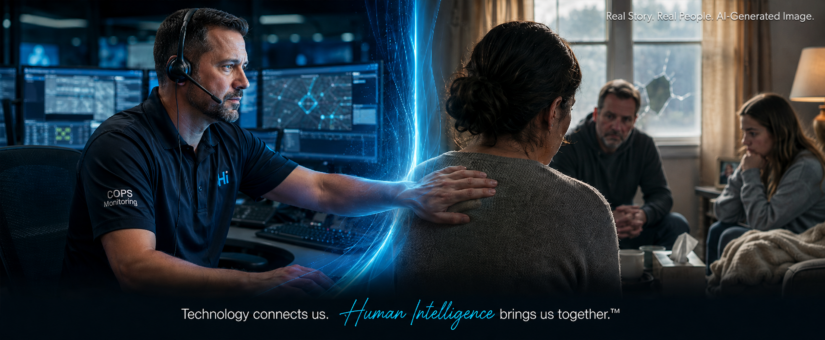
Mike recognized that the alarm system had become another source of distress for Albert’s grieving family and worked with our alarm dealer to stop the repeated calls when they needed compassion most.
The glass-break alarm had already activated several times.
When Mike looked deeper into the account history, he discovered why.
Albert had died alone in his home shortly after Thanksgiving. When his family arrived, his brother had to force entry so authorities could get inside.
That damaged entry triggered the glass-break sensor again and again.
Each activation generated another alarm response.
And because Albert’s family did not know his passcode, they could not simply tell COPS to disregard the signals.
The alarm system was doing exactly what it was designed to do. But the family needed something different.
They had just discovered Albert dead in his home.
They were dealing with authorities.
They were beginning to face everything that comes after losing someone.
And the alarms kept coming.
So did the calls.
Mike could have continued handling each activation as it arrived. The signals were real, the account instructions still applied, and the family could not provide the information normally needed to stop the response.
Instead, Mike recognized the pattern and the human situation behind it.
Mike decided the next alarm should not create the next interruption.
He reviewed the account and saw that the only contact numbers belonged to Albert’s home and personal cell phone.
If nothing changed, the cycle would continue.
Mike reached out to our alarm dealer, explained what Albert’s family was going through, and helped get the system temporarily placed on test.
The repeated calls stopped.
Albert’s family could turn their attention away from the alarm system and toward the people, decisions, and arrangements that mattered now.
Mike could not make their loss easier. He could keep COPS from making it harder.
That is where his judgment mattered.
The technically correct response to each new signal could have continued adding disruption to an already painful situation.
Mike looked beyond the individual alarms and understood the larger experience COPS had become part of.
He involved our alarm dealer.
He interrupted the cycle.
And he gave Albert’s family one less thing to deal with while they grieved.
Human Intelligence does not always mean doing more.
Sometimes it means recognizing when continuing the normal process will create a worse human experience and having the judgment to find a better path.
That’s COPS Human Intelligence™ in Action.

Imagine this was your customer’s family.
They have just suffered a devastating loss. They are dealing with authorities, trying to understand what happened, and beginning to make arrangements.
Meanwhile, the alarm system you installed keeps generating activity and COPS keeps calling.
Would you want us to keep treating each alarm as an isolated event?
Or would you want someone like Mike to recognize what your customer’s family is going through, involve you, and help stop an unnecessary source of distress?
In moments like this, COPS is not simply responding to signals.
We are representing you to people who may remember how they were treated during one of the hardest days of their lives.
Choose a monitoring partner whose people know how to apply the process without losing sight of the person.
Mike’s compassion did not replace procedure. His judgment helped COPS use it intelligently when the circumstances demanded something different.
That helped protect Albert’s family from further disruption and helped our alarm dealer provide the kind of care anyone would want associated with their company.
When your customers are hurting, you want Human Intelligence that knows when the best response is to give them room to breathe.