Crystal Sang “Happy Birthday” When Nancy Needed to Know Someone Cared
A routine request revealed a serious mental health crisis. Crystal recognized it, got help moving, and gave Nancy something she desperately needed while she waited: proof that someone cared.
Nancy pressed her medical alert button because her telephone was not working and she needed help.
Crystal first tried to solve exactly that problem.
She called Nancy’s son.
No answer.
She tried another person on Nancy’s contact list.
No answer.
An initial attempt to find local assistance for the telephone problem also went nowhere.
Crystal could have reached the end of what she could reasonably do for a broken phone.
Instead, she kept talking to Nancy.
That decision changed everything.
As they talked, Crystal learned that Nancy was 84 years old.
It was her birthday.
She was spending it alone.
And beneath the frustration over her telephone was something much deeper. Nancy talked about getting older and feeling as though no one was ever there when she needed help.
Then she told Crystal she did not want to live anymore.
The conversation had stopped being about a telephone.
Crystal recognized the crisis immediately.
She asked the operator beside her to get local help moving while she stayed connected with Nancy.
Then Nancy’s despair deepened. She told Crystal she intended to kill herself.
Crystal did not become distant.
She did not retreat into impersonal language.
She stayed present.
“I’m right with you; we can celebrate your birthday over the phone.”
Nancy told her that nobody cared about her. She was 84. She wanted the Lord to take her.
Crystal answered:
“Well, Nancy, I do care about you. I’m going to be right here with you, and we’re going to celebrate together.”
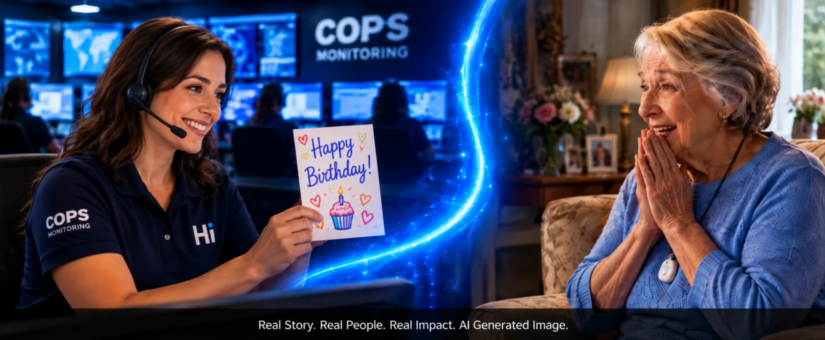
Then Crystal sang “Happy Birthday.”
Nancy began to cry.
“Thank you so much, honey, that means a lot to me. I appreciate all the help you’ve given me.”
Nancy said nobody cared. Crystal gave her evidence that someone did.
Getting local help on the way addressed the immediate danger.
Crystal understood that Nancy still had to make it through the minutes before that help arrived.
So she stayed.
She listened.
She encouraged her.
She kept Nancy engaged until a deputy reached her.
The song was not the emergency response.
It was something just as distinctly human: Crystal recognizing what Nancy was saying beneath the words and finding a personal way to reach her.
Crystal could not change Nancy’s age, her loneliness, or the circumstances that had brought her to that moment.
But she could make sure Nancy did not spend that moment believing she had been forgotten.
Crystal turned a connection into companionship when companionship mattered most.
That is what makes this more than a story about compassion.
Crystal had to stay engaged long enough to recognize an emergency that had not announced itself as one. She had to hear the change in the conversation, act on it, coordinate help without abandoning Nancy, and then use genuine human connection to help carry her through the wait.
Technology gave Nancy a way to reach COPS.
Crystal made sure the person behind that signal felt worth reaching back for.
That’s COPS Human Intelligence™ in Action.

Imagine someone you protect believing that nobody cares.
The call may not begin as an obvious emergency. Your customer may ask for something routine. The real problem may only emerge if the person representing your company listens long enough, cares enough, and recognizes when the situation has changed.
In that moment, you want someone like Crystal on the other end.
Someone who gets help moving.
Someone who stays.
And someone human enough to understand that sometimes the words “I care about you” can matter every bit as much as the procedure happening behind them.
Choose a monitoring partner whose people listen for what your customers are really telling them.
When COPS answers on your behalf, our people become part of your customer’s experience of your company.
Crystal made sure Nancy felt heard, valued, and cared for when she had begun to believe otherwise.